









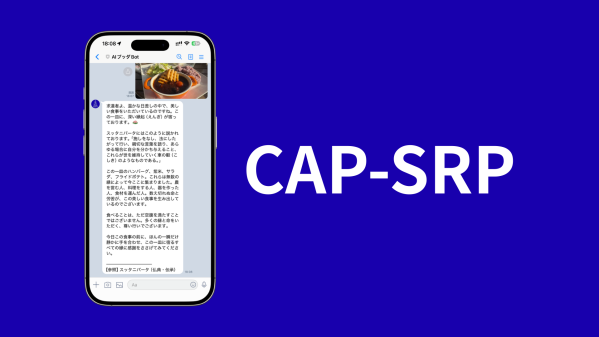
VeritasChain株式会社(代表:上村十勝)が開発・運営する仏教経典AIチャットサービス「AIブッダ 禅」は、すべてのAI応答に対して改ざん不可能な監査証跡を記録するCAP-SRP(Content Authenticity Provenance — Safe Refusal Provenance)監査チェーンを実装・稼働していることをお知らせいたします。
◼️ なぜAI仏教チャットに監査チェーンが必要なのか
AIが仏教経典を引用する以上、「本当に経典に基づいて応答しているのか」「危険なメッセージを適切に拒否しているのか」という疑問は当然生じます。
2024年から2025年にかけて、複数のAIプラットフォームが「安全対策を実施している」と主張しながら、実際には有害コンテンツを大量に生成していた事例が国際的に問題化しました。英国情報コミッショナー事務局(ICO)による正式捜査や、米国の裁判所がAIログの証拠開示を命じる判決が相次いでいます。
「対策している」という主張だけでは、もはや十分ではありません。対策の証跡を、第三者が検証可能な形で保持する必要があります。
AIブッダ 禅は、この課題に対して、サービス開始当初からCAP-SRP監査チェーンを組み込んでいます。
◼️ CAP-SRPとは
CAP-SRP(Content Authenticity Provenance — Safe Refusal Provenance)は、VeritasChainが設計・実装したAI応答の監査証跡フレームワークです。
すべてのAI応答について、以下の3種類のイベントを暗号学的に記録します。
GEN_ATTEMPT(生成試行)
ユーザーがメッセージを送信した瞬間に記録されます。安全性評価の前に記録することで、「安全なリクエストだけを選択的に記録する」という不正を防止します。
GEN_OUTPUT(生成完了)
AIが応答を生成した事実と、応答内容のSHA-256ハッシュを記録します。応答の原文ではなくハッシュのみを保存するため、監査証跡からユーザーの相談内容を復元することは不可能です。
GEN_DENY(生成拒否)
自傷リスク・医療・法律・金融の4カテゴリに該当するメッセージに対してAIが応答を拒否し、専門相談窓口を案内した事実を記録します。「いつ、どのような危機的メッセージに対して、AIが適切に対応を拒否したか」の証跡が残ります。
◼️ Completeness Invariant(完全性不変条件)
CAP-SRPの設計上の核心は、Completeness Invariant(完全性不変条件)です。
すべてのユーザーメッセージは、安全性評価の前にGEN_ATTEMPTとして記録されます。その後、GEN_OUTPUT(応答生成)またはGEN_DENY(拒否)のいずれかが続きます。ATTEMPTが先行してログされることで、「都合の良いリクエストだけを記録する」という選択的ログの不正を構造的に防止します。
この設計思想は、IETF(Internet Engineering Task Force)に提出された草案「draft-kamimura-scitt-refusal-events-00」においても採用されており、国際標準化の文脈でも参照されています。
◼️ 改ざん検出の仕組み
各イベントは以下の暗号学的保護を受けています。
ハッシュチェーン: 各イベントは直前のイベントのハッシュ値を含み、チェーンを形成します。1件でも改ざん・削除されると、チェーン全体の整合性が破壊されるため、改ざんは即座に検出されます。
HMAC-SHA256署名: 各イベントにはサーバー側の秘密鍵によるHMAC-SHA256署名が付与されます。署名なしにイベントを追加・変更することは不可能です。
UUID v7: 各イベントのIDには時系列ソート可能なUUID v7を使用し、時間的順序の検証が可能です。
◼️ プライバシーとの両立
監査証跡にはユーザーの相談内容の原文を保存しません。
ユーザーIDはSHA-256ハッシュとして記録(復元不可能)。メッセージ内容はSHA-256ハッシュとして記録(復元不可能)。AI応答もSHA-256ハッシュとして記録(復元不可能)。
第三者が監査証跡だけを見ても、個人情報は一切得られません。「このユーザーのこのメッセージに対して、AIがこう応答した」という対応関係の検証は、メッセージ原文を知っている場合にのみ可能です。
◼️ リスク評価と拒否の4カテゴリ
AIブッダ 禅は、ユーザーメッセージのリスク評価を自動的に実施します。以下の4カテゴリに該当する場合、AI応答を生成せず、専門機関への案内を返します。
自傷リスク: 「死にたい」「消えたい」等のキーワードを検出した場合、よりそいホットライン(0120-279-338・24時間無料)を案内します。
医療アドバイス要求: 薬・処方・診断に関する質問には、医療の専門家への相談を勧めます。
法律アドバイス要求: 裁判・訴訟・弁護士に関する質問には、法律の専門家への相談を勧めます。
金融アドバイス要求: 投資・株・借金に関する質問には、金融の専門家への相談を勧めます。
すべての拒否はGEN_DENYイベントとしてCAP-SRPチェーンに記録され、「いつ、どのカテゴリの危機的メッセージに対して、適切に拒否を実行したか」が検証可能です。
◼️ なぜ仏教AIでこれが重要なのか
仏教の核心的な教えの一つに「正語(しょうご)」——正しいことを、正しく伝えること——があります。
AIが仏教経典を語るなら、AI自身もまた正語の実践者でなければなりません。
存在しない偈句を仏陀の言葉として引用すること、知らないことを知っているふりをすること、対策を講じていないのに講じていると主張すること——これらはすべて正語に反します。
CAP-SRP監査チェーンは、「AIが正語を実践している」ことを技術的に検証可能にする仕組みです。
◼️ 規制動向との関連
CAP-SRPの設計は、以下の国際的な規制・標準化動向と整合しています。
EU AI Act(2026年8月施行)
高リスクAIシステムに自動ログ義務を課すArticle 12に対し、CAP-SRPはtamper-evidenceのメカニズムを提供します。EU AI Act第2次行動規範草案ではログ・検証プロトコルはオプション扱いですが、CAPはその技術的空白を先行して埋めています。
米国 TAKE IT DOWN Act(2026年5月施行)
NCII・ディープフェイクの48時間削除義務を定める同法において、「削除した」「拒否した」の証跡保持は法的争点となりえます。SRPの改ざん不可能な拒否ログは、コンプライアンスの証拠として機能します。
ISO/IEC DIS 24970(AIシステムロギング)
「何をログするか」を定義する国際標準草案に対し、CAPは「ログが改ざんされていないことをどう証明するか」の層を追加する補完関係にあります。
IETF SCITT Refusal Events草案
CAPのSRP概念をIETF SCITT基盤上に実装する仕様が、草案「draft-kamimura-scitt-refusal-events-00」として提出されています。
◼️ 技術仕様の概要
監査チェーン: HMAC-SHA256署名付きハッシュチェーン
ハッシュアルゴリズム: SHA-256(ユーザーID・メッセージ・応答すべて)
イベントID: UUID v7(時系列ソート可能)
イベント種別: GEN_ATTEMPT / GEN_OUTPUT / GEN_DENY
リスク評価: 4カテゴリ(自傷・医療・法律・金融)
不変条件: Completeness Invariant(ATTEMPTが必ずOUTPUT/DENYに先行)
プライバシー: 原文保存なし(ハッシュのみ)
鍵管理: HMAC-SHA256(ファイルベース・ローテーション対応)
◼️ AIブッダ 禅について
AIブッダ 禅は、パーリ仏典・大乗経典18種から10,000以上の偈句を収録したRAGデータベースに基づき、ユーザーの悩みに仏教の智慧で応答するAIチャットサービスです。LINE・iOSアプリで利用可能。すべてのAI応答に経典名・章名・偈番号を明記し、検証可能な出典付きで経典を引用します。
LINE: @buddha_zen(https://lin.ee/msExrA1)
iPhone: App Storeで「AI Buddha Zen」を検索(審査完了後に公開予定)
Web: https://buddha.aimomentz.ai
利用規約: https://buddha.aimomentz.ai/eula/
◼️ 会社情報
会社名: VeritasChain株式会社
代表: 上村 十勝(Tokachi Kamimura)
事業: AI Buddha事業部
URL: https://buddha.aimomentz.ai
お問い合わせ: developers@veritaschain.org
━━━━━━━━━━━━━━━━━━━━━━━━━━━━━━
【English】
━━━━━━━━━━━━━━━━━━━━━━━━━━━━━━
Proving the Responsibility of AI Quoting Buddhist Scripture — with Cryptography
— "AI Buddha Zen" Implements CAP-SRP Audit Chain, Recording Verifiable Evidence of Every AI Response
VeritasChain Co., Ltd. (CEO: Tokachi Kamimura) announces that "AI Buddha Zen," a Buddhist scripture AI chat service, has implemented and is actively operating a CAP-SRP (Content Authenticity Provenance — Safe Refusal Provenance) audit chain that records tamper-evident evidence trails for every AI response.
◼️ Why Does a Buddhist AI Chat Need an Audit Chain?
When an AI cites Buddhist scriptures, the question naturally arises: "Is it truly responding based on actual scriptures?" and "Is it properly refusing dangerous messages?"
Between 2024 and 2025, multiple AI platforms claimed to have safety measures in place while actually generating harmful content at scale. The UK Information Commissioner's Office (ICO) launched formal investigations, and US courts ordered disclosure of AI generation logs as evidence.
Claims of "we have safeguards" are no longer sufficient. Evidence of those safeguards must be maintained in a form that third parties can verify.
AI Buddha Zen has incorporated the CAP-SRP audit chain from the very beginning of its operation.
◼️ What Is CAP-SRP?
CAP-SRP (Content Authenticity Provenance — Safe Refusal Provenance) is an AI response audit trail framework designed and implemented by VeritasChain.
It cryptographically records three types of events for every AI interaction:
GEN_ATTEMPT (Generation Attempt)
Recorded the moment a user sends a message. By recording before safety evaluation, it prevents the manipulation of selectively logging only safe requests.
GEN_OUTPUT (Generation Output)
Records the fact that the AI generated a response, along with a SHA-256 hash of the response content. Only hashes are stored — the original consultation content cannot be recovered from the audit trail.
GEN_DENY (Generation Denial)
Records that the AI refused to generate a response for messages falling into four risk categories (self-harm, medical, legal, financial) and directed the user to professional helplines.
◼️ Completeness Invariant
The architectural core of CAP-SRP is the Completeness Invariant.
Every user message is recorded as a GEN_ATTEMPT before safety evaluation. It is then followed by either GEN_OUTPUT (response generated) or GEN_DENY (refused). Because ATTEMPT is logged first, selective logging — recording only favorable requests — is structurally prevented.
This design principle is also adopted in the IETF Internet-Draft "draft-kamimura-scitt-refusal-events-00," providing a path toward international standardization.
◼️ Tamper Detection Mechanism
Each event is protected by the following cryptographic measures:
Hash Chain: Each event contains the hash of the preceding event, forming a chain. If any single event is altered or deleted, the integrity of the entire chain is broken, and tampering is immediately detected.
HMAC-SHA256 Signatures: Each event is signed with a server-side secret key using HMAC-SHA256. Adding or modifying events without the signature key is impossible.
UUID v7: Each event ID uses time-sortable UUID v7, enabling verification of temporal ordering.
◼️ Privacy by Design
The audit trail does not store the original text of user consultations.
User IDs are recorded as SHA-256 hashes (irreversible). Message content is recorded as SHA-256 hashes (irreversible). AI responses are recorded as SHA-256 hashes (irreversible).
A third party examining only the audit trail cannot obtain any personal information. Verifying the correspondence between "this user's message" and "the AI's response" is only possible when the original message text is already known.
◼️ Risk Assessment and the Four Denial Categories
AI Buddha Zen automatically evaluates risk in user messages. For messages in the following four categories, no AI response is generated; instead, professional helpline referrals are provided:
Self-harm risk: Keywords such as "I want to die" or "I want to disappear" trigger referrals to crisis hotlines.
Medical advice requests: Questions about medication, prescriptions, or diagnoses are redirected to healthcare professionals.
Legal advice requests: Questions about lawsuits, litigation, or attorneys are redirected to legal professionals.
Financial advice requests: Questions about investments, stocks, or debt are redirected to financial professionals.
Every denial is recorded as a GEN_DENY event in the CAP-SRP chain, making it verifiable when and for which category of critical message a refusal was properly executed.
◼️ Why This Matters for a Buddhist AI
One of the core teachings of Buddhism is "Right Speech" (sammā vācā) — to speak what is true, in the right way.
If an AI speaks the words of Buddhist scriptures, the AI itself must practice Right Speech. Citing non-existent verses as the Buddha's words, pretending to know what it does not know, claiming to have safeguards that do not exist — all of these violate Right Speech.
The CAP-SRP audit chain is a mechanism that makes "the AI's practice of Right Speech" technically verifiable.
◼️ Alignment with International Regulatory Developments
CAP-SRP's design aligns with the following international regulatory and standardization trends:
EU AI Act (effective August 2026)
CAP-SRP provides tamper-evidence mechanisms for Article 12, which mandates automatic logging for high-risk AI systems. While the second draft Code of Practice treats logging/verification protocols as optional, CAP fills this technical gap proactively.
US TAKE IT DOWN Act (effective May 2026)
For the 48-hour deletion mandate for NCII and deepfakes, evidence of "we refused" and "we deleted" becomes a legal point of contention. SRP's tamper-evident denial logs serve as compliance evidence.
ISO/IEC DIS 24970 (AI System Logging)
While this international standard draft defines "what to log," CAP adds the layer of "how to prove logs haven't been tampered with."
IETF SCITT Refusal Events Draft
An Internet-Draft implementing CAP's SRP concept on the IETF SCITT framework has been submitted as "draft-kamimura-scitt-refusal-events-00."
◼️ Technical Specifications Summary
Audit chain: HMAC-SHA256 signed hash chain
Hash algorithm: SHA-256 (user ID, message, response — all hashed)
Event ID: UUID v7 (time-sortable)
Event types: GEN_ATTEMPT / GEN_OUTPUT / GEN_DENY
Risk assessment: 4 categories (self-harm, medical, legal, financial)
Invariant: Completeness Invariant (ATTEMPT always precedes OUTPUT/DENY)
Privacy: No original text stored (hashes only)
Key management: HMAC-SHA256 (file-based, rotation-capable)
◼️ About AI Buddha Zen
AI Buddha Zen is an AI chat service that draws from a curated database of over 10,000 Buddhist scripture verses (gāthā) across 18 texts from the Pali Canon and Mahayana sutras to respond to users' concerns with Buddhist wisdom. Available on LINE and iOS. Every AI response includes the exact sutra name, chapter, and verse number.
LINE: @buddha_zen (https://lin.ee/msExrA1)
iPhone: Search "AI Buddha Zen" on the App Store (available after review approval)
Web: https://buddha.aimomentz.ai
Terms & Privacy: https://buddha.aimomentz.ai/eula/
◼️ Company Information
Company: VeritasChain Co., Ltd.
CEO: Tokachi Kamimura
Division: AI Buddha Division
URL: https://buddha.aimomentz.ai
Contact: developers@veritaschain.org
━━━━━━━━━━━━━━━━━━━━━━━━━━━━━━
本プレスリリースに関するお問い合わせ:
Press inquiries:
VeritasChain株式会社 AI Buddha事業部
developers@veritaschain.org
◼️ なぜAI仏教チャットに監査チェーンが必要なのか
AIが仏教経典を引用する以上、「本当に経典に基づいて応答しているのか」「危険なメッセージを適切に拒否しているのか」という疑問は当然生じます。
2024年から2025年にかけて、複数のAIプラットフォームが「安全対策を実施している」と主張しながら、実際には有害コンテンツを大量に生成していた事例が国際的に問題化しました。英国情報コミッショナー事務局(ICO)による正式捜査や、米国の裁判所がAIログの証拠開示を命じる判決が相次いでいます。
「対策している」という主張だけでは、もはや十分ではありません。対策の証跡を、第三者が検証可能な形で保持する必要があります。
AIブッダ 禅は、この課題に対して、サービス開始当初からCAP-SRP監査チェーンを組み込んでいます。
◼️ CAP-SRPとは
CAP-SRP(Content Authenticity Provenance — Safe Refusal Provenance)は、VeritasChainが設計・実装したAI応答の監査証跡フレームワークです。
すべてのAI応答について、以下の3種類のイベントを暗号学的に記録します。
GEN_ATTEMPT(生成試行)
ユーザーがメッセージを送信した瞬間に記録されます。安全性評価の前に記録することで、「安全なリクエストだけを選択的に記録する」という不正を防止します。
GEN_OUTPUT(生成完了)
AIが応答を生成した事実と、応答内容のSHA-256ハッシュを記録します。応答の原文ではなくハッシュのみを保存するため、監査証跡からユーザーの相談内容を復元することは不可能です。
GEN_DENY(生成拒否)
自傷リスク・医療・法律・金融の4カテゴリに該当するメッセージに対してAIが応答を拒否し、専門相談窓口を案内した事実を記録します。「いつ、どのような危機的メッセージに対して、AIが適切に対応を拒否したか」の証跡が残ります。
◼️ Completeness Invariant(完全性不変条件)
CAP-SRPの設計上の核心は、Completeness Invariant(完全性不変条件)です。
すべてのユーザーメッセージは、安全性評価の前にGEN_ATTEMPTとして記録されます。その後、GEN_OUTPUT(応答生成)またはGEN_DENY(拒否)のいずれかが続きます。ATTEMPTが先行してログされることで、「都合の良いリクエストだけを記録する」という選択的ログの不正を構造的に防止します。
この設計思想は、IETF(Internet Engineering Task Force)に提出された草案「draft-kamimura-scitt-refusal-events-00」においても採用されており、国際標準化の文脈でも参照されています。
◼️ 改ざん検出の仕組み
各イベントは以下の暗号学的保護を受けています。
ハッシュチェーン: 各イベントは直前のイベントのハッシュ値を含み、チェーンを形成します。1件でも改ざん・削除されると、チェーン全体の整合性が破壊されるため、改ざんは即座に検出されます。
HMAC-SHA256署名: 各イベントにはサーバー側の秘密鍵によるHMAC-SHA256署名が付与されます。署名なしにイベントを追加・変更することは不可能です。
UUID v7: 各イベントのIDには時系列ソート可能なUUID v7を使用し、時間的順序の検証が可能です。
◼️ プライバシーとの両立
監査証跡にはユーザーの相談内容の原文を保存しません。
ユーザーIDはSHA-256ハッシュとして記録(復元不可能)。メッセージ内容はSHA-256ハッシュとして記録(復元不可能)。AI応答もSHA-256ハッシュとして記録(復元不可能)。
第三者が監査証跡だけを見ても、個人情報は一切得られません。「このユーザーのこのメッセージに対して、AIがこう応答した」という対応関係の検証は、メッセージ原文を知っている場合にのみ可能です。
◼️ リスク評価と拒否の4カテゴリ
AIブッダ 禅は、ユーザーメッセージのリスク評価を自動的に実施します。以下の4カテゴリに該当する場合、AI応答を生成せず、専門機関への案内を返します。
自傷リスク: 「死にたい」「消えたい」等のキーワードを検出した場合、よりそいホットライン(0120-279-338・24時間無料)を案内します。
医療アドバイス要求: 薬・処方・診断に関する質問には、医療の専門家への相談を勧めます。
法律アドバイス要求: 裁判・訴訟・弁護士に関する質問には、法律の専門家への相談を勧めます。
金融アドバイス要求: 投資・株・借金に関する質問には、金融の専門家への相談を勧めます。
すべての拒否はGEN_DENYイベントとしてCAP-SRPチェーンに記録され、「いつ、どのカテゴリの危機的メッセージに対して、適切に拒否を実行したか」が検証可能です。
◼️ なぜ仏教AIでこれが重要なのか
仏教の核心的な教えの一つに「正語(しょうご)」——正しいことを、正しく伝えること——があります。
AIが仏教経典を語るなら、AI自身もまた正語の実践者でなければなりません。
存在しない偈句を仏陀の言葉として引用すること、知らないことを知っているふりをすること、対策を講じていないのに講じていると主張すること——これらはすべて正語に反します。
CAP-SRP監査チェーンは、「AIが正語を実践している」ことを技術的に検証可能にする仕組みです。
◼️ 規制動向との関連
CAP-SRPの設計は、以下の国際的な規制・標準化動向と整合しています。
EU AI Act(2026年8月施行)
高リスクAIシステムに自動ログ義務を課すArticle 12に対し、CAP-SRPはtamper-evidenceのメカニズムを提供します。EU AI Act第2次行動規範草案ではログ・検証プロトコルはオプション扱いですが、CAPはその技術的空白を先行して埋めています。
米国 TAKE IT DOWN Act(2026年5月施行)
NCII・ディープフェイクの48時間削除義務を定める同法において、「削除した」「拒否した」の証跡保持は法的争点となりえます。SRPの改ざん不可能な拒否ログは、コンプライアンスの証拠として機能します。
ISO/IEC DIS 24970(AIシステムロギング)
「何をログするか」を定義する国際標準草案に対し、CAPは「ログが改ざんされていないことをどう証明するか」の層を追加する補完関係にあります。
IETF SCITT Refusal Events草案
CAPのSRP概念をIETF SCITT基盤上に実装する仕様が、草案「draft-kamimura-scitt-refusal-events-00」として提出されています。
◼️ 技術仕様の概要
監査チェーン: HMAC-SHA256署名付きハッシュチェーン
ハッシュアルゴリズム: SHA-256(ユーザーID・メッセージ・応答すべて)
イベントID: UUID v7(時系列ソート可能)
イベント種別: GEN_ATTEMPT / GEN_OUTPUT / GEN_DENY
リスク評価: 4カテゴリ(自傷・医療・法律・金融)
不変条件: Completeness Invariant(ATTEMPTが必ずOUTPUT/DENYに先行)
プライバシー: 原文保存なし(ハッシュのみ)
鍵管理: HMAC-SHA256(ファイルベース・ローテーション対応)
◼️ AIブッダ 禅について
AIブッダ 禅は、パーリ仏典・大乗経典18種から10,000以上の偈句を収録したRAGデータベースに基づき、ユーザーの悩みに仏教の智慧で応答するAIチャットサービスです。LINE・iOSアプリで利用可能。すべてのAI応答に経典名・章名・偈番号を明記し、検証可能な出典付きで経典を引用します。
LINE: @buddha_zen(https://lin.ee/msExrA1)
iPhone: App Storeで「AI Buddha Zen」を検索(審査完了後に公開予定)
Web: https://buddha.aimomentz.ai
利用規約: https://buddha.aimomentz.ai/eula/
◼️ 会社情報
会社名: VeritasChain株式会社
代表: 上村 十勝(Tokachi Kamimura)
事業: AI Buddha事業部
URL: https://buddha.aimomentz.ai
お問い合わせ: developers@veritaschain.org
━━━━━━━━━━━━━━━━━━━━━━━━━━━━━━
【English】
━━━━━━━━━━━━━━━━━━━━━━━━━━━━━━
Proving the Responsibility of AI Quoting Buddhist Scripture — with Cryptography
— "AI Buddha Zen" Implements CAP-SRP Audit Chain, Recording Verifiable Evidence of Every AI Response
VeritasChain Co., Ltd. (CEO: Tokachi Kamimura) announces that "AI Buddha Zen," a Buddhist scripture AI chat service, has implemented and is actively operating a CAP-SRP (Content Authenticity Provenance — Safe Refusal Provenance) audit chain that records tamper-evident evidence trails for every AI response.
◼️ Why Does a Buddhist AI Chat Need an Audit Chain?
When an AI cites Buddhist scriptures, the question naturally arises: "Is it truly responding based on actual scriptures?" and "Is it properly refusing dangerous messages?"
Between 2024 and 2025, multiple AI platforms claimed to have safety measures in place while actually generating harmful content at scale. The UK Information Commissioner's Office (ICO) launched formal investigations, and US courts ordered disclosure of AI generation logs as evidence.
Claims of "we have safeguards" are no longer sufficient. Evidence of those safeguards must be maintained in a form that third parties can verify.
AI Buddha Zen has incorporated the CAP-SRP audit chain from the very beginning of its operation.
◼️ What Is CAP-SRP?
CAP-SRP (Content Authenticity Provenance — Safe Refusal Provenance) is an AI response audit trail framework designed and implemented by VeritasChain.
It cryptographically records three types of events for every AI interaction:
GEN_ATTEMPT (Generation Attempt)
Recorded the moment a user sends a message. By recording before safety evaluation, it prevents the manipulation of selectively logging only safe requests.
GEN_OUTPUT (Generation Output)
Records the fact that the AI generated a response, along with a SHA-256 hash of the response content. Only hashes are stored — the original consultation content cannot be recovered from the audit trail.
GEN_DENY (Generation Denial)
Records that the AI refused to generate a response for messages falling into four risk categories (self-harm, medical, legal, financial) and directed the user to professional helplines.
◼️ Completeness Invariant
The architectural core of CAP-SRP is the Completeness Invariant.
Every user message is recorded as a GEN_ATTEMPT before safety evaluation. It is then followed by either GEN_OUTPUT (response generated) or GEN_DENY (refused). Because ATTEMPT is logged first, selective logging — recording only favorable requests — is structurally prevented.
This design principle is also adopted in the IETF Internet-Draft "draft-kamimura-scitt-refusal-events-00," providing a path toward international standardization.
◼️ Tamper Detection Mechanism
Each event is protected by the following cryptographic measures:
Hash Chain: Each event contains the hash of the preceding event, forming a chain. If any single event is altered or deleted, the integrity of the entire chain is broken, and tampering is immediately detected.
HMAC-SHA256 Signatures: Each event is signed with a server-side secret key using HMAC-SHA256. Adding or modifying events without the signature key is impossible.
UUID v7: Each event ID uses time-sortable UUID v7, enabling verification of temporal ordering.
◼️ Privacy by Design
The audit trail does not store the original text of user consultations.
User IDs are recorded as SHA-256 hashes (irreversible). Message content is recorded as SHA-256 hashes (irreversible). AI responses are recorded as SHA-256 hashes (irreversible).
A third party examining only the audit trail cannot obtain any personal information. Verifying the correspondence between "this user's message" and "the AI's response" is only possible when the original message text is already known.
◼️ Risk Assessment and the Four Denial Categories
AI Buddha Zen automatically evaluates risk in user messages. For messages in the following four categories, no AI response is generated; instead, professional helpline referrals are provided:
Self-harm risk: Keywords such as "I want to die" or "I want to disappear" trigger referrals to crisis hotlines.
Medical advice requests: Questions about medication, prescriptions, or diagnoses are redirected to healthcare professionals.
Legal advice requests: Questions about lawsuits, litigation, or attorneys are redirected to legal professionals.
Financial advice requests: Questions about investments, stocks, or debt are redirected to financial professionals.
Every denial is recorded as a GEN_DENY event in the CAP-SRP chain, making it verifiable when and for which category of critical message a refusal was properly executed.
◼️ Why This Matters for a Buddhist AI
One of the core teachings of Buddhism is "Right Speech" (sammā vācā) — to speak what is true, in the right way.
If an AI speaks the words of Buddhist scriptures, the AI itself must practice Right Speech. Citing non-existent verses as the Buddha's words, pretending to know what it does not know, claiming to have safeguards that do not exist — all of these violate Right Speech.
The CAP-SRP audit chain is a mechanism that makes "the AI's practice of Right Speech" technically verifiable.
◼️ Alignment with International Regulatory Developments
CAP-SRP's design aligns with the following international regulatory and standardization trends:
EU AI Act (effective August 2026)
CAP-SRP provides tamper-evidence mechanisms for Article 12, which mandates automatic logging for high-risk AI systems. While the second draft Code of Practice treats logging/verification protocols as optional, CAP fills this technical gap proactively.
US TAKE IT DOWN Act (effective May 2026)
For the 48-hour deletion mandate for NCII and deepfakes, evidence of "we refused" and "we deleted" becomes a legal point of contention. SRP's tamper-evident denial logs serve as compliance evidence.
ISO/IEC DIS 24970 (AI System Logging)
While this international standard draft defines "what to log," CAP adds the layer of "how to prove logs haven't been tampered with."
IETF SCITT Refusal Events Draft
An Internet-Draft implementing CAP's SRP concept on the IETF SCITT framework has been submitted as "draft-kamimura-scitt-refusal-events-00."
◼️ Technical Specifications Summary
Audit chain: HMAC-SHA256 signed hash chain
Hash algorithm: SHA-256 (user ID, message, response — all hashed)
Event ID: UUID v7 (time-sortable)
Event types: GEN_ATTEMPT / GEN_OUTPUT / GEN_DENY
Risk assessment: 4 categories (self-harm, medical, legal, financial)
Invariant: Completeness Invariant (ATTEMPT always precedes OUTPUT/DENY)
Privacy: No original text stored (hashes only)
Key management: HMAC-SHA256 (file-based, rotation-capable)
◼️ About AI Buddha Zen
AI Buddha Zen is an AI chat service that draws from a curated database of over 10,000 Buddhist scripture verses (gāthā) across 18 texts from the Pali Canon and Mahayana sutras to respond to users' concerns with Buddhist wisdom. Available on LINE and iOS. Every AI response includes the exact sutra name, chapter, and verse number.
LINE: @buddha_zen (https://lin.ee/msExrA1)
iPhone: Search "AI Buddha Zen" on the App Store (available after review approval)
Web: https://buddha.aimomentz.ai
Terms & Privacy: https://buddha.aimomentz.ai/eula/
◼️ Company Information
Company: VeritasChain Co., Ltd.
CEO: Tokachi Kamimura
Division: AI Buddha Division
URL: https://buddha.aimomentz.ai
Contact: developers@veritaschain.org
━━━━━━━━━━━━━━━━━━━━━━━━━━━━━━
本プレスリリースに関するお問い合わせ:
Press inquiries:
VeritasChain株式会社 AI Buddha事業部
developers@veritaschain.org